
Cheyenne Released Mugshot Records
A booking photo is the image taken by a criminal-justice agency at or near arrest or detention. In Colorado, the research treats booking photographs within the criminal-justice-records framework. That means a photo may be releasable, restricted, redacted, or denied depending on the custodian, case status, court order, juvenile or protected status, and Colorado Criminal Justice Records Act review.
Cheyenne County adds a local wrinkle. No active Cheyenne County jail facility was found, and the sheriff's own source says jail operations are contracted with surrounding counties. The Cheyenne County Sheriff's Office may hold the arrest or local processing record. The contracted housing jail may hold the booking photo if the person was physically booked there. CDOC may hold a state offender photo if the person later entered state-prison custody. Those are different photo sources and should not be merged.
Where Cheyenne Mugshots Appear
No Cheyenne County, Colorado sheriff roster photo feed was found, and no Cheyenne County sheriff mobile jail app was found. Because the county contracts jail operations, the most reliable photo path is records-first: confirm the arresting agency and housing jail, then ask the correct custodian whether a booking photograph exists and is releasable. State and specialty systems apply only when the case facts point there.
| Channel | Has photo? | How to access |
|---|---|---|
| Cheyenne County Sheriff's Office | Possible for arrest or local processing records. | Ask for the public booking photograph or the custodian that holds it. |
| Contracted housing jail | Possible when the person was booked into that jail. | Confirm the housing jail first, then request the photo under that jail's policy. |
| CDOC offender search | Possible for state-prison offender records. | Search by DOCNO or name when the person was sentenced to CDOC. |
| Colorado VINE | Possible in some participating facility details. | Search the person and open details if the facility feeds photo data. |
| CBI registry | Possible for qualifying registrants only. | Use the registry for registry status, not for general mugshot lookup. |
| Court or news records | Case-specific and not the main photo source. | Use only when an official court file or public agency release supports the image. |
Request Cheyenne Booking Photos
The booking-photo request should be precise and purpose-neutral. Start with the Cheyenne County Sheriff's Office for the local arrest or citation history. If the person was booked into a surrounding-county jail, ask the sheriff or court to identify the housing jail, then direct the booking-photo request to that jail. If a state-prison sentence followed, use CDOC records for the state offender photo instead of calling it a county mugshot.
- Identify the person with full name, date of birth if known, date of arrest, and Cheyenne County case or incident information.
- Ask the Cheyenne County Sheriff's Office whether it holds the booking photograph or can identify the housing jail that created it.
- If a contracted jail held the person, request the photo from that jail's records custodian and include the booking number if available.
- Ask for the legal reason if the custodian denies the photo, redacts it, or says another agency holds it.
- Use the Cheyenne County court record to match the photo request to the case disposition, bond order, transfer, or sentence.
Suggested wording: request records sufficient to identify the booking photograph for the named person, the arrest or booking date, the booking number if known, the releasing or housing facility, and the public basis for any denial or redaction.
Colorado Mugshot Record Limits
The Colorado Attorney General's CORA and CCJRA explainer is relevant because criminal-justice records follow the Colorado Criminal Justice Records Act framework rather than ordinary open-records treatment alone.
The source supports cautious wording: a booking photo may be a public criminal-justice record, but release depends on the custodian's review and any legal limits.
C.R.S. 24-72-305 gives criminal-justice records custodians discretion and grounds for denial. If access is denied, the research notes that a requester may ask for a written statement of the denial grounds. General Colorado public-record timing principles use a three-working-day presumption with a possible seven-working-day extension, but criminal-justice records can require separate review, redaction, fee estimates, or denial analysis.
No Cheyenne Mugshot App
No Cheyenne County, Colorado sheriff mobile app with inmate lookup, recent releases, or mugshots was found. That matters because some counties publish booking photos in a sheriff app even when the main website is limited. Cheyenne County's source set did not show that kind of app. A mobile-friendly sheriff website is not a jail-info app, and Colorado VINE is a separate notification service.
The VINELink mobile app listing describes custody-change notifications and states that data availability depends on agency participation.
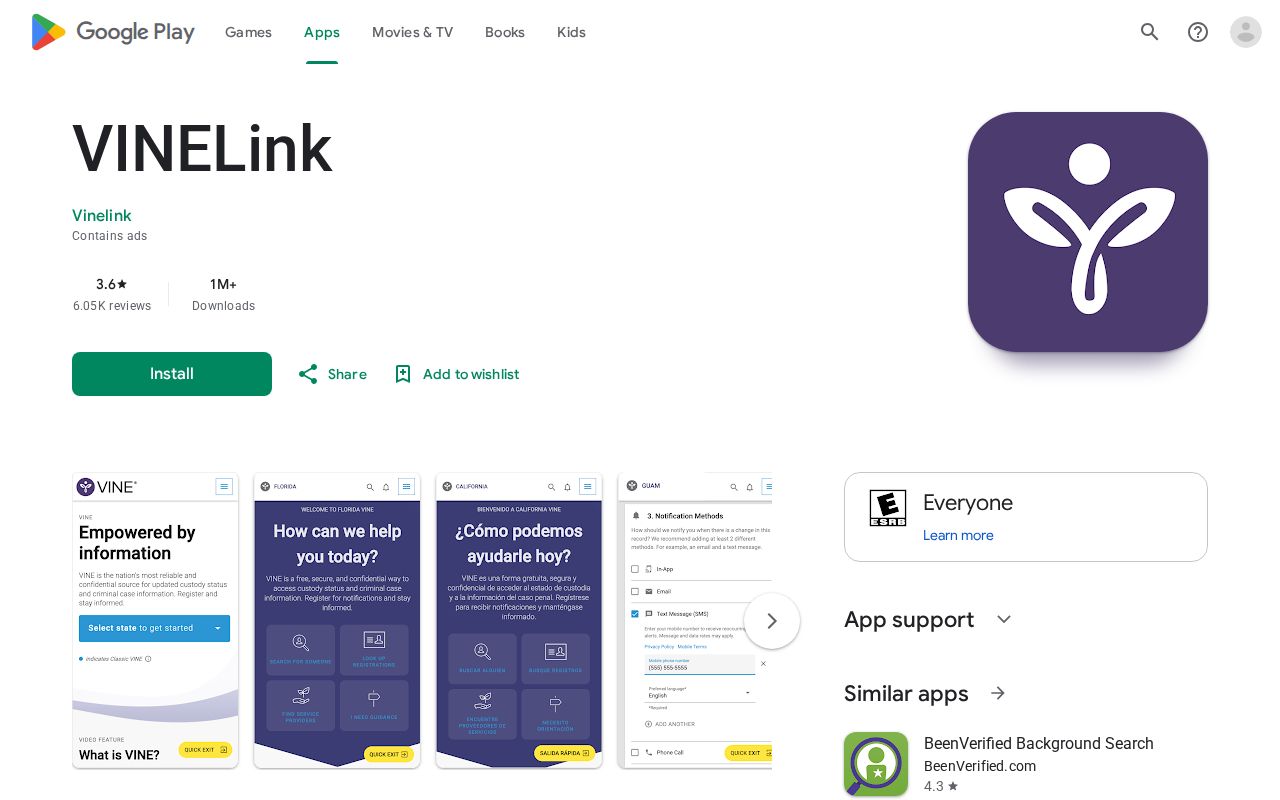
Use VINE as a custody-status support tool where the actual housing facility participates, not as proof that Cheyenne County has a sheriff mugshot app.
CDOC and CBI Photo Paths
CDOC photos are state-prison offender photos. They are not the same as a Cheyenne County jail booking photo. Use the Colorado Department of Corrections offender search when the person was sentenced to CDOC, released from a CDOC facility, placed on parole, or discharged from a Colorado prison sentence. Search by DOCNO when known. Name searches can produce multiple matches, so compare identity fields and case context before treating a result as the correct person.
The CBI sex offender registry is also a narrow channel. It may include a photograph for qualifying registrants, but it is not a general released-inmate mugshot index. The CBI search agreement warns that records and identifiers have limits, that some categories are not posted on the public site, and that complete information may require contacting local law enforcement or CBI. Use the registry only when registration status is part of the case.
- County booking photo
- Photo tied to arrest or jail booking, held by the sheriff or housing jail if retained and releasable.
- CDOC offender photo
- State-prison image tied to a Colorado Department of Corrections offender record.
- Registry photo
- Image shown for qualifying registrants under registry rules, not a general arrest-photo archive.
Third-Party Mugshot Caution
Commercial mugshot pages, generic people-search pages, and reposted images should not be used as release confirmation. The research specifically says not to endorse those sources. A reposted Cheyenne County arrest photo can be stale, incomplete, misidentified, or disconnected from the current case result. A person may be released while an old photo remains online. A missing photo also does not prove that no arrest, booking, or release occurred.
Local news and public agency posts are different only when they report a specific case and identify the source of the information. Even then, use them as case context, not as the release record. The release itself still needs an official custodian: sheriff, contracted jail, court, CDOC, VINE, BOP, ICE, or CBI depending on the facts.
Use official custody sources. A booking photo can persist after release, so the photo alone does not prove current custody or current release status.
Cheyenne Photo Context Checks
A booking photo should be read with the release record, not apart from it. The Cheyenne County court record may show a bond release, dismissal, deferred judgment, sentence to probation, transfer to CDOC, or another outcome that changes the meaning of the arrest image. The contracted housing jail may confirm the photo and release date, but the court file often explains the authority behind the release. CDOC may later show a state offender photo if the person entered prison, which is a different record from the county booking photograph.
Ask each source a different question. Ask the sheriff whether Cheyenne County created an arrest or processing record. Ask the housing jail whether it created and retained a booking photograph. Ask the court whether the case disposition, sentence, bond, or transfer changed custody status. Ask CDOC only when a state-prison sentence or parole record is involved. This keeps a Cheyenne County released inmate mugshot search from treating one old image as a full custody history.
It also helps with timing. A photo may be taken at booking, while the release reason may be entered later by the jail or explained later by a court order. If the person moved from a contracted jail to CDOC, the county booking photo and state offender photo may both exist, but they answer different record questions. Keep the agency, date, and custody stage attached to each image.
Sealed Cheyenne Mugshot Records
Sealing, expungement, juvenile confidentiality, and protected-status rules can limit what appears in ordinary public searches. The court record may also explain why a jail photo should not be treated as the full case outcome. A dismissal, acquittal, deferred judgment, probation sentence, or transfer can change the context around an arrest photo. The release record and court disposition should be checked before repeating or relying on a photo.
Cheyenne County photo requests should also account for property and evidence rules. A booking photograph may be retained by one custodian while other property or case materials are held by another. If a record is sealed, protected, or tied to a juvenile matter, a public search may return little or nothing. That absence is a records-access boundary, not a sign that the event never occurred. Use the court's official process for sealing questions and the agency records custodian for photo availability.
Colorado also has a history of anti-pay-to-remove mugshot legislation, described in the research through the Colorado Freedom of Information Coalition's discussion of HB 14-1047. The cautious practical rule is simple: request photos from government custodians, do not pay a reposting site for removal advice, and use official court or agency processes for correction, sealing, or removal questions. For a recent custody event, the 24-hour release list process explains how to find the correct custodian before requesting the photo. For a full custody and release-record path, use the Cheyenne County released inmates search page.